project details
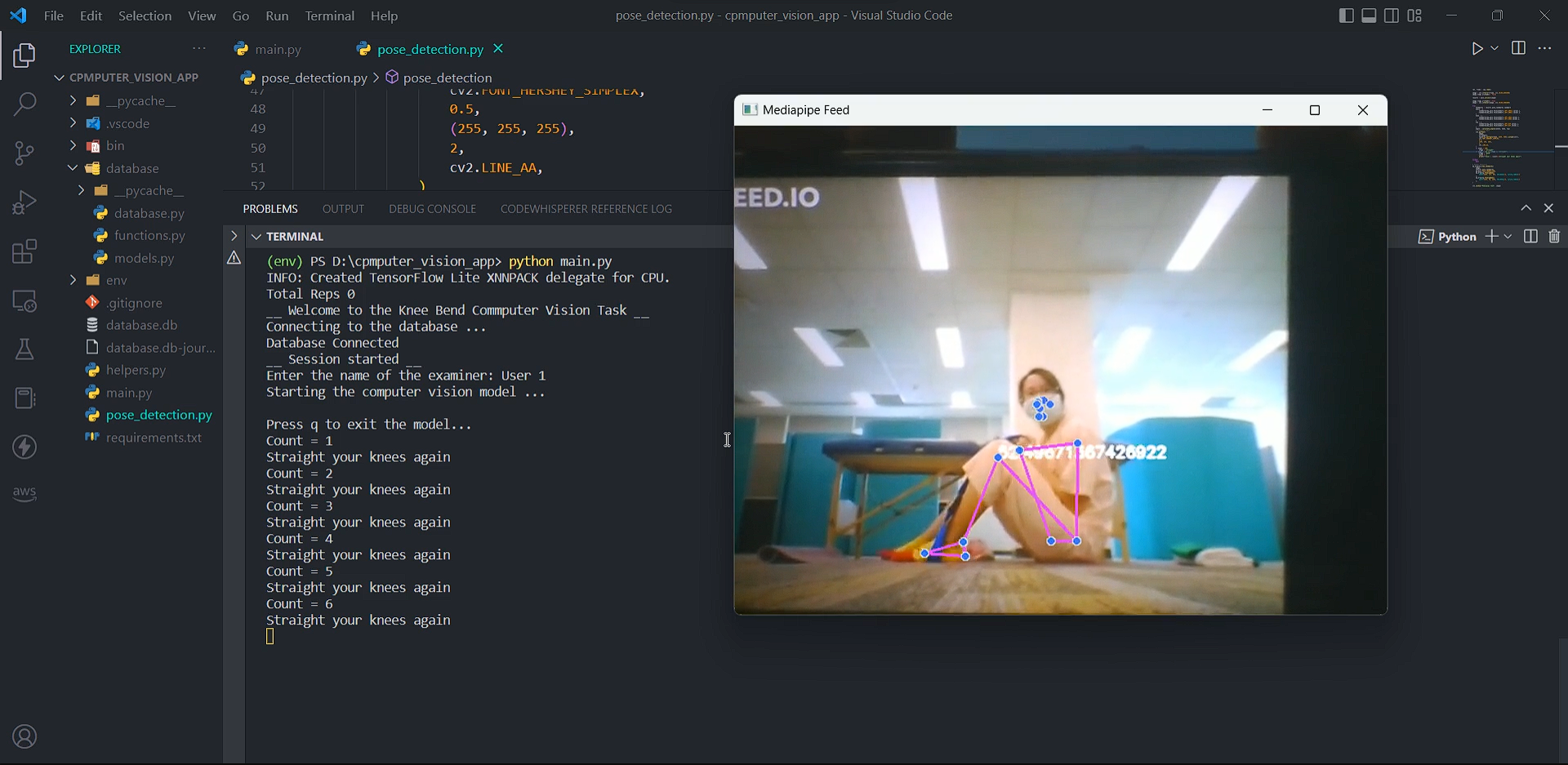
#overview
Count Reps uses pose estimation to count exercise repetitions from a camera feed. It is designed to support movements such as sit ups, push ups, and dumbbell presses while allowing the counting logic to be adapted for other exercises. A local database stores session information so the tool can track progress instead of losing the count when the camera closes.
The central challenge is translating a noisy stream of body landmarks into a stable exercise state. Rather than counting every small movement, the application observes relevant joints, derives angles or positions, and waits for a complete transition between configured stages before adding a repetition.
#install and run
Install and run
python -m venv env
pip install -r requirements.txt
python main.py#architecture and features
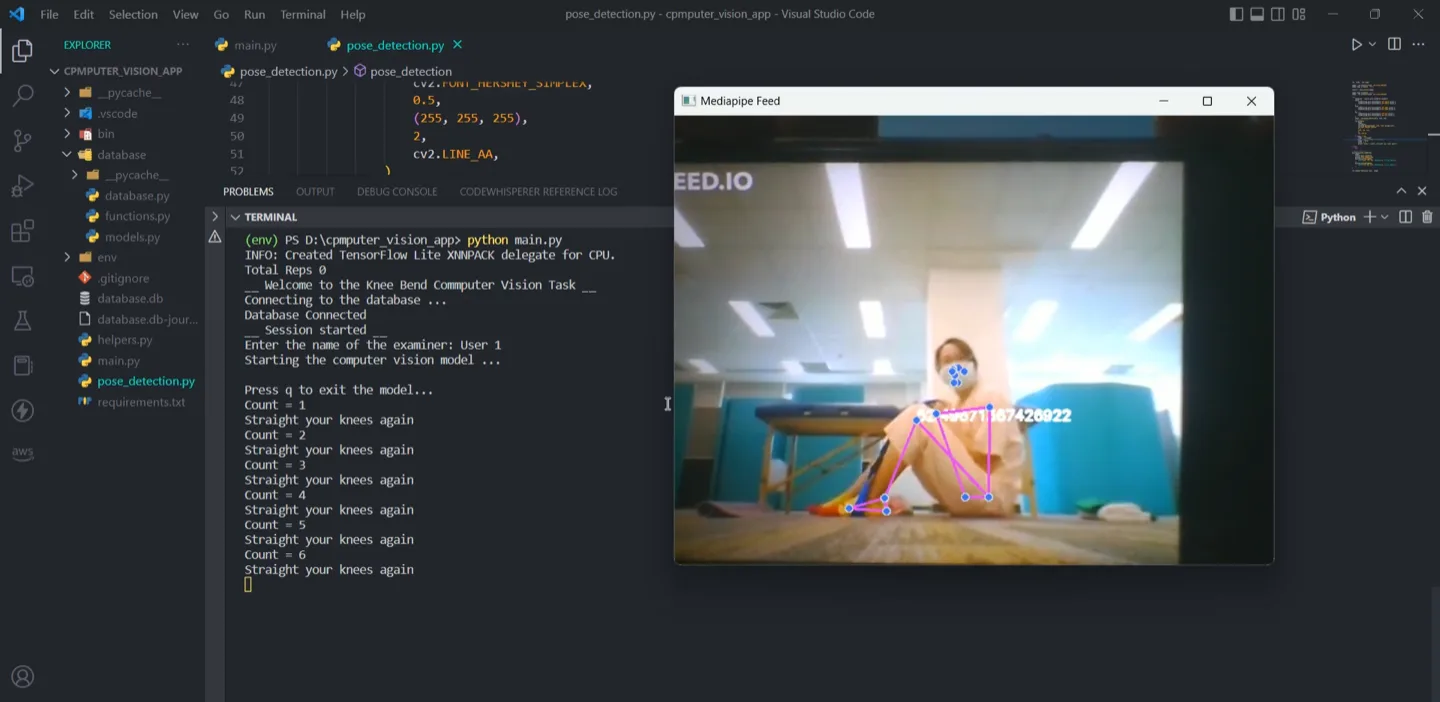
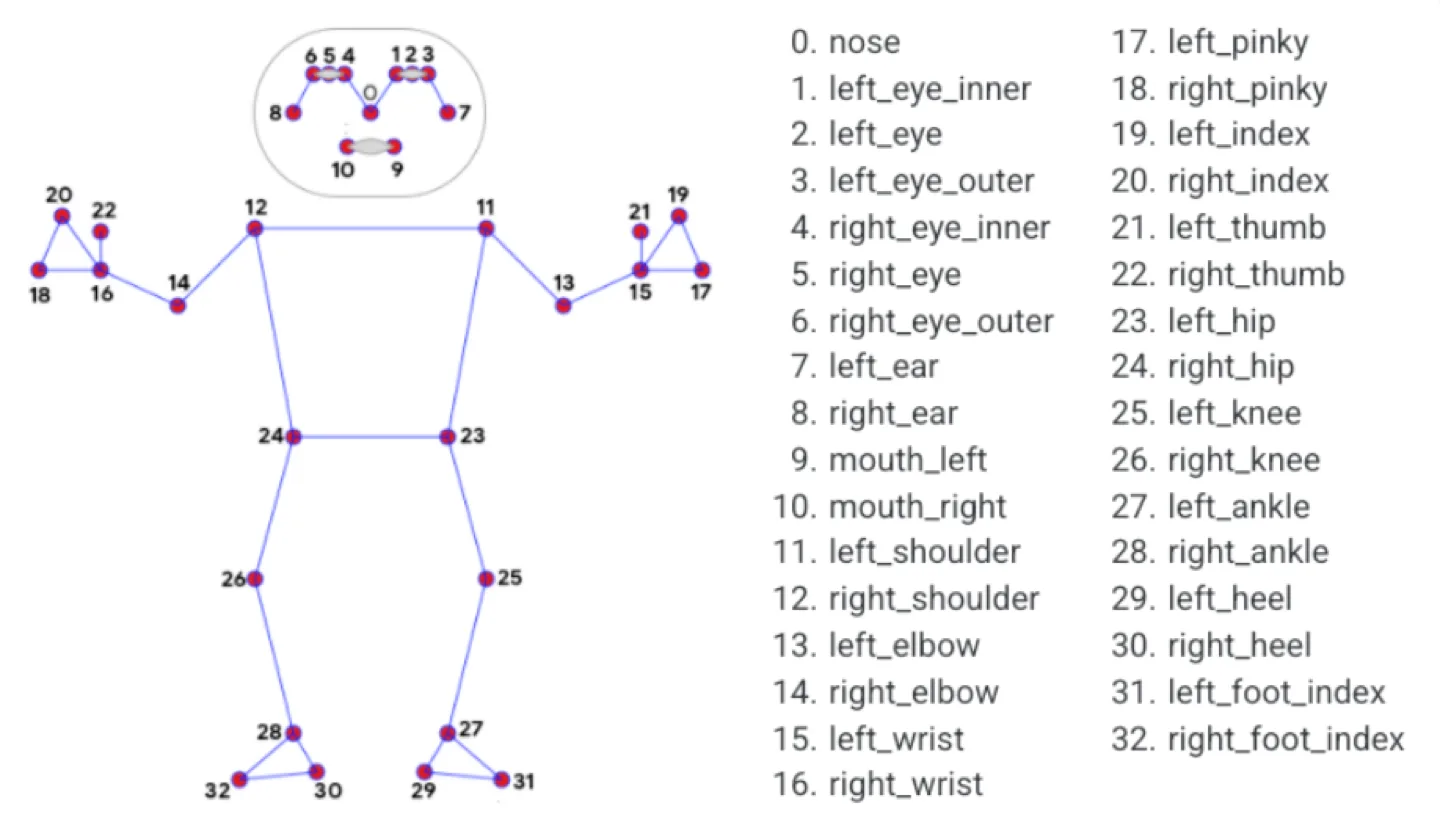
OpenCV captures frames and handles the live display. MediaPipe supplies pose landmarks, which the application converts into measurements for each exercise. A small state machine distinguishes the starting and finishing phases of a repetition and prevents the same motion from being counted repeatedly while the user remains near a threshold.
SQLite stores workout or repetition history locally. Keeping persistence on the same machine makes the project easy to run without an account or hosted service. Exercise rules remain customizable because different movements require different landmarks, angle ranges, and direction changes.
#inside the project
#using the project
- 01Clone the repository, create a Python environment, install its computer vision dependencies, and confirm that OpenCV can access the intended camera. Good lighting and a view that keeps the required joints visible improve landmark stability.
- 02Start the application and select or configure the exercise. Move through the full range of motion while watching the landmark overlay and stage indicator. The counter increases only after the configured start and finish conditions have both been observed.
- 03Review saved session data to compare workouts over time. When adding a new exercise, identify the most reliable landmarks, calculate an appropriate measurement, and calibrate thresholds using several body positions and camera angles before treating the count as dependable.